
VIP member
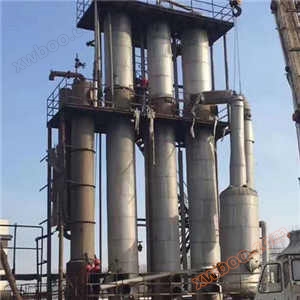
Second hand evaporator direct sales
With the update of evaporation technology, there are more and more types of second-hand evaporators. Second hand evaporators are common equipment in i
Product details
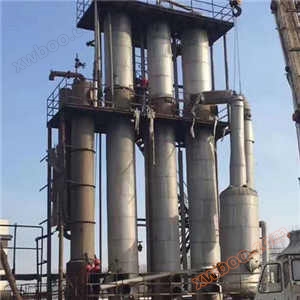
With the update of evaporation technology, there are more and more types of second-hand evaporators. Second hand evaporators are common equipment in industrial production and wastewater treatment industries. Some customers may have questions. What are the three common types of second-hand evaporators? What are the common second-hand evaporators?
There are many types of second-hand evaporators, and different uses require different types of second-hand evaporators. Today, the editor will give you an answer to the three common types of second-hand evaporators and briefly introduce them.
Second hand evaporators are divided into evaporative concentrators and evaporative crystallizers according to their different uses. The names of second-hand evaporators may vary depending on the process used, but they are similar. The main purpose of a second-hand evaporator is to evaporate non-volatile solutes contained in a solution, boil and vaporize the solution, and remove it, thereby increasing the concentration of solutes in the solution.
The equipment used for evaporating solutions is called a second-hand evaporator, which is further divided into single effect evaporation, multi effect evaporation, and MVR evaporation processes. The distinction between these three types of evaporation processes mainly lies in the utilization of steam. Below, the editor will give you a specific introduction.
During the operation of a second-hand evaporator, it is necessary to utilize fresh saturated steam from the heat source plant, which is called raw steam.
The steam evaporated from a solution is called secondary steam, which is used to distinguish it from raw steam. In the operation of a second-hand evaporator, the secondary steam is generally directly condensed by condensation. For operations that do not utilize its condensation heat, it is called single effect evaporation. If secondary steam is introduced into the next effect second-hand evaporator as heating steam, the operation of using its condensation heat is called multi effect evaporation, and the equipment that uses this evaporation method is called multi effect second-hand evaporator.
Have you gained any understanding of single effect second-hand evaporators and multi effect second-hand evaporators through the above introduction? The difference between these two types of second-hand evaporators is whether the steam is reused multiple times, while the difference between MVR second-hand evaporators and single effect second-hand evaporators and multi effect second-hand evaporators is that the MVR evaporation process does not require external heating of steam for operation.
MVR second-hand evaporator uses a steam compressor to compress and utilize steam, without the need for condensing equipment or external input of steam. It only requires electrical energy and relies on the work done by the steam compressor. This is the difference between single effect second-hand evaporators and multi effect second-hand evaporators.
Single effect second-hand evaporators, multi effect second-hand evaporators, and MVR second-hand evaporators are the three common types of second-hand evaporators, and their applicable ranges are also different. Single effect second-hand evaporators are suitable for manufacturers with slightly lower processing and production capacity, which means that small manufacturers are more suitable for single effect second-hand evaporators.
Multi effect second-hand evaporators are suitable for manufacturers with large processing capacities, while MVR second-hand evaporators are suitable for manufacturers between single effect evaporation and multi effect evaporation, and are also suitable for factories with small footprint and limited space.
Online inquiry
-
Contacts
-
Company
-
Telephone
-
Email
-
WeChat
-
Verification Code
-
Message Content
-